The history of chocolate liqueur is a fascinating journey that reflects the enduring appeal of chocolate and the innovation of those who sought to elevate its flavor. Originating in the early 17th century, chocolate was first introduced to Europe from the New World by explorers and traders. Initially consumed as a beverage, it was often mixed with spices like cinnamon and sweeteners to temper its natural bitterness. As Europeans grew more enamored with chocolate, the idea of combining it with alcohol naturally emerged, driven by the popularity of both ingredients.
One of the earliest documented chocolate liqueurs was created in European monasteries during the 1600s. Monks, skilled in the art of distillation, experimented with cocoa beans, alcohol, sugar, and flavorings to craft beverages for medicinal and recreational purposes. These concoctions became sought-after luxuries, setting the stage for chocolate liqueur's enduring appeal.
By the 18th century, the production of chocolate liqueur expanded beyond monastic circles. In France, Marie Brizard, a pioneering chocolatier and distiller, introduced a chocolate liqueur in 1763 that gained widespread acclaim. Similarly, Italy saw the evolution of the Bicerin, a drink combining chocolate, coffee, and cream, into a liqueur cherished for its richness.
The Industrial Revolution in the 19th century brought significant advancements in chocolate production and distillation, making chocolate liqueur more accessible. As European countries refined their recipes, they added regional flair, creating diverse variations of this decadent beverage.
In the 20th century, chocolate liqueur entered the global stage with brands like Godiva and Mozart leading the charge. These companies perfected the art of blending high-quality chocolate with spirits like vodka, rum, and brandy. Godiva, launched in 1966, became synonymous with luxury, while Mozart, founded in Austria, infused classical elegance into its liqueurs. These modern liqueurs showcased innovations like cream-based varieties and flavored infusions, appealing to diverse palates.
Today, chocolate liqueur remains a versatile and indulgent treat, enjoyed in cocktails, desserts, or sipped on its own. Innovations such as dairy-free and vegan options reflect evolving consumer preferences, ensuring its place in contemporary cuisine.
From its humble monastic beginnings to its current global popularity, chocolate liqueur stands as a testament to the timeless allure of chocolate and the creativity of its makers. It continues to delight connoisseurs and casual drinkers alike, bridging centuries of tradition and modern sophistication.
Making Chocolate Liqueur: A Journey Through History and Innovation
The history of food processing centers on the transformation of raw ingredients into food or various food forms. This tradition can be traced back to ancient times, specifically the prehistoric era, where early processing techniques like roasting, smoking, steaming, fermenting, sun drying, and preserving with salt were utilized. Without a doubt, food processing stands as one of humanity's oldest practices, dating back to time immemorial.
Pages
Showing posts with label chocolate. Show all posts
Sunday, January 26, 2025
Sunday, December 17, 2023
Hershey's Kisses Production History
In 1893, having been inspired by the chocolate he experienced at the World’s Columbian Exposition in Chicago, Milton Hershey promptly procured the necessary machinery and initiated the process of coating his renowned caramels with chocolate.
Prior to the advent of Kisses chocolates, Hershey had a molded confection called Sweethearts, characterized by a conical shape with a heart-shaped indentation at its base. The inception of Hershey's Kisses Chocolates occurred in 1907, produced by the Hershey Chocolate Company in Derry, Pennsylvania.
These petite chocolate pieces exhibit a distinctive conical shape, often compared to flat-bottomed teardrops. In the initial production phase from 1907 to 1921, Kisses chocolates were individually enveloped in foil, and each package included a square of tissue paper identifying it as a Hershey’s product.
The Hershey Company developed a machine capable of automatically fashioning the teardrop shape using a nozzle. The machine efficiently placed each Kiss onto a conveyor belt in a sequential manner.
In 1921, Hershey registered a trademark for the name "HERSHEY'S KISSES." To counter increasing competition, The Hershey Company (formerly Hershey Chocolate Company) designed wrapping machinery capable of incorporating a visual product marker, known as a plume, tag, or flag, in August 1921.
Milton S. Hershey obtained a registered design trademark (Reg. 0186828) in 1924 for the "foil-wrapped conical configuration with plume," which encompassed the distinctive paper plume extending from the top of the aluminum foil wrapper.
The production of Kisses Chocolates extended from 1907 to 1942, with a hiatus during World War II due to aluminum rationing. During the nearly six-year absence, Hershey reconfigured its Kisses production equipment to manufacture chocolate D-Rations for the US Military.
In 1962, the company commenced wrapping Kisses in red and green foils for the Christmas season, and the introduction of pink and red Valentine varieties, now commonly found in supermarkets during this month, took place in 1986.
Hershey's Kisses Production History
Prior to the advent of Kisses chocolates, Hershey had a molded confection called Sweethearts, characterized by a conical shape with a heart-shaped indentation at its base. The inception of Hershey's Kisses Chocolates occurred in 1907, produced by the Hershey Chocolate Company in Derry, Pennsylvania.
These petite chocolate pieces exhibit a distinctive conical shape, often compared to flat-bottomed teardrops. In the initial production phase from 1907 to 1921, Kisses chocolates were individually enveloped in foil, and each package included a square of tissue paper identifying it as a Hershey’s product.
The Hershey Company developed a machine capable of automatically fashioning the teardrop shape using a nozzle. The machine efficiently placed each Kiss onto a conveyor belt in a sequential manner.
In 1921, Hershey registered a trademark for the name "HERSHEY'S KISSES." To counter increasing competition, The Hershey Company (formerly Hershey Chocolate Company) designed wrapping machinery capable of incorporating a visual product marker, known as a plume, tag, or flag, in August 1921.
Milton S. Hershey obtained a registered design trademark (Reg. 0186828) in 1924 for the "foil-wrapped conical configuration with plume," which encompassed the distinctive paper plume extending from the top of the aluminum foil wrapper.
The production of Kisses Chocolates extended from 1907 to 1942, with a hiatus during World War II due to aluminum rationing. During the nearly six-year absence, Hershey reconfigured its Kisses production equipment to manufacture chocolate D-Rations for the US Military.
In 1962, the company commenced wrapping Kisses in red and green foils for the Christmas season, and the introduction of pink and red Valentine varieties, now commonly found in supermarkets during this month, took place in 1986.
Hershey's Kisses Production History
Labels:
chocolate,
Hershey's Kisses
Sunday, August 28, 2022
Timeline of chocolate processing
Olmec civilization
The Olmec, one of the earliest civilizations in Latin America, were the first to turn the cacao plant into chocolate. They drank their chocolate during rituals and used it as medicine.
Mayan civilization
The Maya seasoned their chocolate by mixing the roasted cacao seed paste into a drink with water, chile peppers and cornmeal, transferring the mixture repeatedly between pots until the top was covered with a thick foam.
1729:
The first mechanical cocoa grinder was invented in Bristol, England by an apothecary, Walter Churchman.
1765:
Chocolate manufacture started in the American colonies at Dorchester, Massachusetts, using beans brought in by New England.
1825:
Young Philippe Suchard opened a chocolate shop near Neuchâtel, a town in the French speaking part of Switzerland. he invented various machines and devices including a special machine to mix sugar and cocoa powder to make the chocolate a homogeneous mass.
1815:
Dutch chemist Coenraad van Houten introduced alkaline salts to chocolate, which reduced its bitterness. The process became known as “Dutch processing”.
1828:
Coenraad van Houten created the cocoa press squeezed the fatty butter from roasted cacao beans, leaving behind a dry cake that could be pulverized into a fine powder that could be mixed with liquids and other ingredients, poured into molds and solidified into edible, easily digestible chocolate.
1847:
British chocolatier J.S. Fry and Sons created the first chocolate bar molded from a paste made of sugar, chocolate liquor and cocoa butter.
1876:
Swiss chocolatier Daniel Peter utilized powdered milk developed several years earlier by his neighbor Henri Nestlé to produce the first milk chocolate bar.
1879:
Another Swiss chocolatier Rudolphe Lindt from Berne improved Suchard’s invention and developed another mixing device called “conche”.
1900:
In the United States, Milton Hershey pioneered the assembly-line production of milk chocolate. Timeline of chocolate processing
The Olmec, one of the earliest civilizations in Latin America, were the first to turn the cacao plant into chocolate. They drank their chocolate during rituals and used it as medicine.
Mayan civilization
The Maya seasoned their chocolate by mixing the roasted cacao seed paste into a drink with water, chile peppers and cornmeal, transferring the mixture repeatedly between pots until the top was covered with a thick foam.
1729:
The first mechanical cocoa grinder was invented in Bristol, England by an apothecary, Walter Churchman.
1765:
Chocolate manufacture started in the American colonies at Dorchester, Massachusetts, using beans brought in by New England.
1825:
Young Philippe Suchard opened a chocolate shop near Neuchâtel, a town in the French speaking part of Switzerland. he invented various machines and devices including a special machine to mix sugar and cocoa powder to make the chocolate a homogeneous mass.
1815:
Dutch chemist Coenraad van Houten introduced alkaline salts to chocolate, which reduced its bitterness. The process became known as “Dutch processing”.
1828:
Coenraad van Houten created the cocoa press squeezed the fatty butter from roasted cacao beans, leaving behind a dry cake that could be pulverized into a fine powder that could be mixed with liquids and other ingredients, poured into molds and solidified into edible, easily digestible chocolate.
1847:
British chocolatier J.S. Fry and Sons created the first chocolate bar molded from a paste made of sugar, chocolate liquor and cocoa butter.
1876:
Swiss chocolatier Daniel Peter utilized powdered milk developed several years earlier by his neighbor Henri Nestlé to produce the first milk chocolate bar.
1879:
Another Swiss chocolatier Rudolphe Lindt from Berne improved Suchard’s invention and developed another mixing device called “conche”.
1900:
In the United States, Milton Hershey pioneered the assembly-line production of milk chocolate. Timeline of chocolate processing
Labels:
chocolate,
chocolate processing,
timeline
Saturday, October 3, 2020
History Of Chocolate Pralines
Praline itself is a French confection, and it was invented when an accident occurs that combined pecans, chocolate and burnt sugars.
The name of pralines derived from French diplomat in the early 17th century whose name and title was César, duc de Choiseul, comte du Plessis-Praslin. His personal chef, Clement Lassangne is believed to be the original inventor of pralines. Chef Lassagne's original praline were whole almonds individually coated in caramelized sugar, as opposed to dark nougat, where a sheet of caramelized sugar covers many nuts.
In 1636 Chef Lassagne decided to coat almonds with boiling sugar. It has been said that Lassagne getting the idea from children who were scavenging for scraps in the kitchens, nibbling on almonds and caramel leftover from one of his pastry creations. Some said that the children stealing almonds from the kitchens and Lassagne followed the delicious smell to find them caramelizing the almonds in sugar over a candle. Lassange then used the idea coated almonds in sugar which were said to be used as gifts to visitors or as a digestive aid.
The other version of the story: The chef Lassagne getting the idea from a clumsy young apprentice who knocked over a container of almonds into a vat of cooking caramel.
Chocolate pralines were brought over from France by the Ursuline nuns, who came to New Orleans in 1727. These nuns were tasked to teach local young girls the domestics arts, which include cooking and how to make confection. The girls were taught the art of praline making. As these girls married and they moved throughout Louisiana and the rest of the south, the praline automatically became a popular regional treat.
History Of Chocolate Pralines
The name of pralines derived from French diplomat in the early 17th century whose name and title was César, duc de Choiseul, comte du Plessis-Praslin. His personal chef, Clement Lassangne is believed to be the original inventor of pralines. Chef Lassagne's original praline were whole almonds individually coated in caramelized sugar, as opposed to dark nougat, where a sheet of caramelized sugar covers many nuts.
In 1636 Chef Lassagne decided to coat almonds with boiling sugar. It has been said that Lassagne getting the idea from children who were scavenging for scraps in the kitchens, nibbling on almonds and caramel leftover from one of his pastry creations. Some said that the children stealing almonds from the kitchens and Lassagne followed the delicious smell to find them caramelizing the almonds in sugar over a candle. Lassange then used the idea coated almonds in sugar which were said to be used as gifts to visitors or as a digestive aid.
The other version of the story: The chef Lassagne getting the idea from a clumsy young apprentice who knocked over a container of almonds into a vat of cooking caramel.
Chocolate pralines were brought over from France by the Ursuline nuns, who came to New Orleans in 1727. These nuns were tasked to teach local young girls the domestics arts, which include cooking and how to make confection. The girls were taught the art of praline making. As these girls married and they moved throughout Louisiana and the rest of the south, the praline automatically became a popular regional treat.
History Of Chocolate Pralines
Monday, December 12, 2016
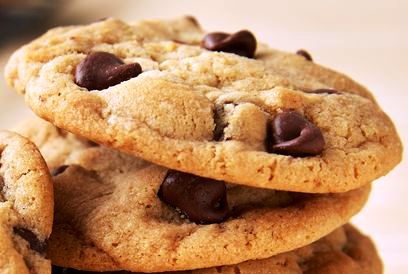
Chocolate chip cookies
The beloved chocolate chip cookie was invented in the 1930s by Ruth Graves Wakefield. The cookie’s history long predates the United States, but the name itself comes from the early colonial period. Ruth Graves Wakefield and her husband owned a restaurant in Whitman, Massachusetts named the Toll House Inn.
The desserts served at the Toll House Inn soon became widely known. One day, Wakefield was busy in the kitchen. She was mixing up the dough for batch of her famous Butter Drop Do Cookies.
The more recent recipe Wakefield following called Baler’s Chocolate, but Wakefield had run out.
Then Wakefield saw some Nestle semi-sweet candy bars on the shelf. She used an ice pick to chop the candy into small pieces. Then she stirred the pieces into the dough. According to other story, a bar of semisweet chocolate fell from a shelf above Wakefield’s work station into her industrial mixer as she was making a batch of her renowned Butter Drop Do sugar cookies.
The chocolate was broken into chunks by the electric mixer, and rather than throw out the amended dough, Wakefield and her fellow bakers decided to bake it. The cookies were a big hit that day.
The cookies Ruth had created became very popular with gustes at the inn, and soon her recipe was published in a Boston newspaper, as well as other papers in the New England area.
Soon demand for the unique cookies grew. Nestlé agreed to give Wakefield a lifetime’s supply of chocolate in return for permission to print her recipe for Toll House cookies on the wrapper of the chocolate bar.
Chocolate chip cookies
The desserts served at the Toll House Inn soon became widely known. One day, Wakefield was busy in the kitchen. She was mixing up the dough for batch of her famous Butter Drop Do Cookies.
The more recent recipe Wakefield following called Baler’s Chocolate, but Wakefield had run out.
| Chocolate chip cookies |
The chocolate was broken into chunks by the electric mixer, and rather than throw out the amended dough, Wakefield and her fellow bakers decided to bake it. The cookies were a big hit that day.
The cookies Ruth had created became very popular with gustes at the inn, and soon her recipe was published in a Boston newspaper, as well as other papers in the New England area.
Soon demand for the unique cookies grew. Nestlé agreed to give Wakefield a lifetime’s supply of chocolate in return for permission to print her recipe for Toll House cookies on the wrapper of the chocolate bar.
Chocolate chip cookies
Labels:
chocolate,
chocolate chip,
cookies,
invention
Sunday, April 26, 2015
Steam driven chocolate mill
Before the idea of processing the cocoa bean into a paste like bar it was always served as a hot drink usually with spices and herbs.
The quickening pace of industrialization in the late eighteenth century affected the making of chocolate. From 1770, the advent of steam power caused the chocolate and confectionery industry to progress rapidly.
The invention of a steam engine made mass production of cocoa possible and more affordable. In 1732, French inventor Monsieur Dubuisson created the steam-driven chocolate mill, which made it much easier to grind cacao beans and produce large amounts of chocolate. Prior to this, the beans had been ground by using the hand tools, a very time-consuming and costly process.
In 1828, the cocoa press was invented, which improved the quality of the drink and reduce the price even further.
Steam driven chocolate mill
The quickening pace of industrialization in the late eighteenth century affected the making of chocolate. From 1770, the advent of steam power caused the chocolate and confectionery industry to progress rapidly.
The invention of a steam engine made mass production of cocoa possible and more affordable. In 1732, French inventor Monsieur Dubuisson created the steam-driven chocolate mill, which made it much easier to grind cacao beans and produce large amounts of chocolate. Prior to this, the beans had been ground by using the hand tools, a very time-consuming and costly process.
In 1828, the cocoa press was invented, which improved the quality of the drink and reduce the price even further.
Steam driven chocolate mill
Labels:
chocolate,
chocolate mill,
invention,
steam power
Monday, December 1, 2014
Chocolate Dutching process
A process of solubilizing the coca powder was developed by Conrad J Van Houten in 1828. He discovered that processing chocolate liquor with alkali neutralizes various acids and so tends to increase the chocolate flavor, reduce bitterness and darken the chocolate.
The process was called the Dutching process, and the resultant cocoa is called Dutched cocoa.
The addition of alkali produces a pH of 6.0 to 8.8 in Dutch process chocolates. In contrast, the pH range without the Dutching process is about 5.2 to 6.9.
One of the benefits of Dutch cocoa or chocolate is its reduced tendency to settle out when combined with liquids. The Dutching process develops a more bitter, darker chocolate.
Today, most chocolates are prepared with alkali, a procedure still called ‘Dutching’, and this process made possible a solid eating chocolate.
The invention of milk chocolate powder by Henry Nestle in 1867 made chocolates much more palatable to people taste.
Chocolate Dutching process
The process was called the Dutching process, and the resultant cocoa is called Dutched cocoa.
The addition of alkali produces a pH of 6.0 to 8.8 in Dutch process chocolates. In contrast, the pH range without the Dutching process is about 5.2 to 6.9.
One of the benefits of Dutch cocoa or chocolate is its reduced tendency to settle out when combined with liquids. The Dutching process develops a more bitter, darker chocolate.
Today, most chocolates are prepared with alkali, a procedure still called ‘Dutching’, and this process made possible a solid eating chocolate.
The invention of milk chocolate powder by Henry Nestle in 1867 made chocolates much more palatable to people taste.
Chocolate Dutching process
Labels:
alkaline,
chocolate,
Dutching process,
van Houten
Sunday, July 14, 2013
History of chocolate coating
Chocolate assortment, confections bars coated with chocolate and chocolate cookies and cakes are all manufactured by the coating process known as chocolate enrobing.
Since it was discovered that food pieces could be coated with chocolate as a way of creating new and wonderful taste sensations, candy makers have accumulated a wide variety of shapes, sizes, textures and recipes for articles to be coated.
Until the early 1900s chocolates were coated by hand, or by automated batch techniques copying hand-dipping methods.
The first enrober is credited to Ernest Paul Frederic Magniez of France in 1901 and was produced by A Savy.
The early chocolate makers who started as manufacturers stayed manufacturers and were coaters as well.
Swiss companies such as Nestle, Suchard, Lindt, Tobler, and Callier began as manufacturers and coaters with their special consumer candies and continued as both.
History of chocolate coating
Since it was discovered that food pieces could be coated with chocolate as a way of creating new and wonderful taste sensations, candy makers have accumulated a wide variety of shapes, sizes, textures and recipes for articles to be coated.
Until the early 1900s chocolates were coated by hand, or by automated batch techniques copying hand-dipping methods.
The first enrober is credited to Ernest Paul Frederic Magniez of France in 1901 and was produced by A Savy.
The early chocolate makers who started as manufacturers stayed manufacturers and were coaters as well.
Swiss companies such as Nestle, Suchard, Lindt, Tobler, and Callier began as manufacturers and coaters with their special consumer candies and continued as both.
History of chocolate coating
Labels:
chocolate,
coating,
manufacturing,
processing
Wednesday, April 10, 2013
Chocolate conching
Invented by Rodolphe Lindt in Switzerland in 1879, conching gives finished chocolate its melt-in-the-mouth smoothness. Lindt called his invention a ‘conche’ from the Spanish word for shell, concha.
Prior to Lindt’s invention, chocolate was much grittier and coarser. Rodolphe Lindt son of pharmacist, he had trained as a confectioner apprentice and bought two fire-damaged factory buildings and some roasting machinery from a bankrupt mill to manufacture chocolate.
He began experimenting with the amount of cocoa butter in his confections. He found that with the right combination he could produce a rich chocolate that melted in the tongue.
Rodolphe Lindt developed the conche, a shell-shaped bin permitting fine milling of chocolate by roiling it to and fro and aerating it. He found that the more he mixed the chocolate the smoother it became.
The Lindt process also made it possible to pour chocolate into molds instead of pressing it as had been necessary theretofore.
Chocolate conching
Prior to Lindt’s invention, chocolate was much grittier and coarser. Rodolphe Lindt son of pharmacist, he had trained as a confectioner apprentice and bought two fire-damaged factory buildings and some roasting machinery from a bankrupt mill to manufacture chocolate.
He began experimenting with the amount of cocoa butter in his confections. He found that with the right combination he could produce a rich chocolate that melted in the tongue.
Rodolphe Lindt developed the conche, a shell-shaped bin permitting fine milling of chocolate by roiling it to and fro and aerating it. He found that the more he mixed the chocolate the smoother it became.
The Lindt process also made it possible to pour chocolate into molds instead of pressing it as had been necessary theretofore.
Chocolate conching
Subscribe to:
Posts (Atom)
Popular Posts
-
Food preservation is as old as human civilization. Preservation of foods inhibits spoilage cause by bacterial growth, oxidation, insects or...
-
The mechanization of tomato paste production traces back to the early 20th century, as industrial food processing evolved to meet rising urb...
-
The grain paste left to stand for a time sooner or later collects wild yeasts form air, and begins to ferment. This was the beginning of lea...
-
Prior to the development of refrigeration and cooling technologies, large quantities of salt were added to meats for long term preservation....
-
During the 20th century the continued application of scientific research to food production has significantly changed the way the world eats...